7 Great Films From the 2016 New Directors/New Films Series
 Março 15, 2016 at 2:30PM
This year's New York showcase of fresh talent behind the
camera is another first-rate look at filmmakers who are going places.
READ MORE: 'The Fits,' 'Neon Bull' Headline First Wave of New Directors/New Films Selections
Steven Spielberg. Spike Lee. Kelly Reichardt. Christopher Nolan. All of these filmmakers premiered their early works at the New Directors/New Films series,
which has a long track record for heralding fresh talent. This year's
edition, which runs March 16 - 27, is no exception. A joint production
of the Film Society of Lincoln Center and the Museum of Modern Art, the
series opens Wednesday with "Under the Shadow," Iranian director Babak
Anvari's eerie period piece about a young woman and her daughter haunted
by a demonic presence in the midst of the Iran-Iraq War.
Allegorical
horror at its finest, "Under the Shadow" is a unique genre hybrid that
showcases yet another promising newcomer. But it's not the only one.
Here's a look at some of the highlights from this year's 11-day event.
"Cameraperson"
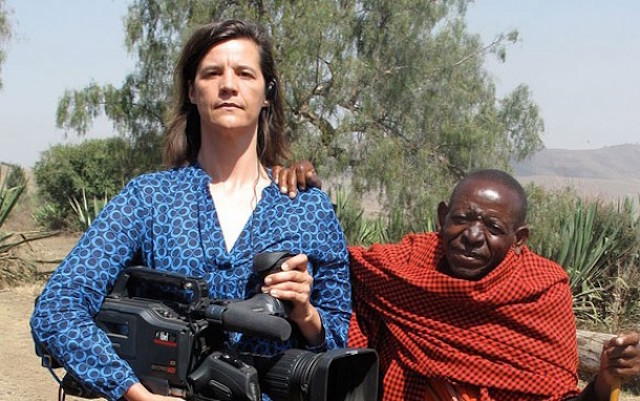
Kirsten Johnson opens "Cameraperson" with a note describing the
project as "my memoir," but it's safe to say there's never been a memoir
quite like this one. Cobbling together footage from her 25 years of
experience as a documentary cinematographer, "Cameraperson" offers a
freewheeling overview of the people and places Johnson has captured over
the course of a diverse career. More than that, the two dozen projects
showcased here alongside original footage confront the process of
creation. This is a collage-like guide to a life of looking. Read the
full review from Sundance here.
"Donald Cried"
The obnoxious man-child is a common trope in American comedies, but
few recent examples can match the hilariously unsettling presence of
Donald Treebeck, the obnoxious central figure played by writer-director
Kris Avedisian in his effective black comedy "Donald Cried." Avedisian's
feature-length debut builds on the distinctively off-putting persona
first seen in his short film, a bespectacled pariah stuck in perpetual
arrested development. While hardly reinventing the wheel, "Donald Cried"
spins it faster than usual, taking cues from its memorably irritating
protagonist. Beneath its entertainment value, the movie also hints at
the tragedy of aimless adulthood.
While the story
technically unfolds from the perspective of his old teen pal Peter
(Jesse Wakeman), who returns to their Rhode Island suburbs from his Wall
Street career after his grandmother dies, Donald welcomes his reluctant
friend back to their world and won't leave him alone. Avedisian gives
Danny McBride a run for his money in this pitch-perfect embodiment of a
wannabe charmer all too eager to remain the center of attention. Read
the full review from the SXSW Film Festival here.
"Evolution"
French director Lucile Hadzihalilovic's follow-up to "Innocence," her
debut, blends dreamy storytelling with body horror of the best kind.
Ten-year-old Nicolas (Max Brebant) spends his days in an isolated
seaside hospital, along with several other children, all of whom are
subjected to an alarming medical process. His mother, and the other
women who tend to the boys, obscure the reasons behind the confined
setting. When Nicolas spies on them after dark, he gets no closer to
answers. But the puzzle pieces gradually congeal into a strangely
consistent world of transgressive sexuality, body horror and laboratory
birth. Nicolas doesn't piece it all together, but as he develops his
individuality, he takes action against the ominous events around him.
It's the year's wildest coming of age story.
"The Fits"
Anna Rose Holmer's first feature is a surreal portrait of an unlikely
young heroine. Eleven-year-old Toni (breakout Royalty Hightower)
aspires to be a boxer while making her way through boring dancing
routines at her Cincinnati middle school. As a convulsive disease begins
to affect several of her classmates, "The Fits" gradually transforms
into a "Twin Peaks"-like look at communal alienation. Hightower's
extraordinary subtle performances meshes perfectly with the movie's
rhythmic portrait of the mysteries and alienation of adolescence.
"Neon Bull"
Many filmmakers obsess over characters living on the margins of
civilization, but Brazilian director Gabriel Mascaro has the rare
ability to burrow inside their experiences. In two narrative features
and a handful of documentaries, Mascaro's filmography blends an textured
storytelling with anthropological investigation. The newest of them,
"Neon Bull," offers startling proof of this talent. Mascaro's vibrant
depiction of Brazilian cowhands delivers a detailed look at a nomadic
universe that's simultaneously flamboyant and gritty. While technically a
fictional narrative, it provides a bridge to Mascaro's nonfiction
background by emphasizing the sights and sounds of a contained
environment. Lyrically involving and deeply sensual, "Neon Bull"
showcases a full-bodied artist in command of his form. Read the full
review from the Toronto International Film Festival here.
"Tikkun"
The travails of ultra-Orthodox judaism don't get more twisted than
"Tikkun," the unsettling black-and-white drama from Israeli filmmaker
Avishai Sivan. Set in an insular religious community, the story revolves
around a young man whose near-death experience sends him on a path
toward secularism that puts his family on edge. Swearing off meat and
running away from home, he gets his first taste of sexual freedoms while
contemplating the nature of his rebellion. Sparse dialogue and
visionary dream sequences (beware the talking reptilian deity that
emerges from the toilet!) endow "Tikkun" with a frightening
expressionistic quality. But it's not without numerous contemplative
moments, including a beautifully poetic scene in which the young man
compares his shifting mindset to staring directly at the sun. A
subversive riff on ideological restrictions, "Tikkun" is bound to start
conversations among genre aficionados and religious scholars alike.
"Weiner"
The second downfall of Anthony Weiner, during his disastrous New
York mayoral campaign, became a national joke for obvious reasons. But
the public couldn't see the sheer mayhem of the Weiner campaign as the
politician faced one of the greatest public humiliations in recent
history. "Weiner," which won the grand jury prize at this year's
Sundance and closes this year's New Directors/New Films, pulls back that
veil. Co-directed by former Weiner chief of staff Josh Kriegman with
Elyse Steinberg, the movie captures Weiner and his beleaguered wife,
Hilary Clinton adviser Huma Abedin, through a series of cringe-inducing
circumstances as the media continually preys on the family's hardships.
Weiner's attempt at pressing ahead against impossible odds results in a
lively farce about the pratfalls of modern celebrity and the hubris
involved in chasing power in the political arena. Read the full review
from Sundance
here.


Sem comentários:
Enviar um comentário