quarta-feira, 28 de setembro de 2011

segunda-feira, 26 de setembro de 2011
Obrigado.
domingo, 25 de setembro de 2011

10 Life-Enhancing Things You Can Do in Ten Minutes or Less
It usually takes us much longer to change our moods than we’d like it to take. Here are ten things you can do in ten minutes or less that will have a positive emotional effect on you and those you love.
1. Watch "The Last Lecture" by Randy Pausch. See it online at Oprah.com. This is a deeply moving segment that may be the best ten minutes you've ever invested in front of a computer.
2. Spend a little while watching the sunset with your mate. Nothing extra is necessary. Just sit and take in the natural beauty of the sky and appreciate being able to share it with the one you love.
3. Sit quietly by yourself. It doesn't really matter where or when. Just let your feelings bubble up and then experience the thoughts flowing out of your mind. Clearing your head and heart will give you extra energy to get through the rest of the day.
4. Write a thank you note to your mate. When was the last time you thanked your partner for just being who he or she is and being with you? Doing this in writing will give your partner something to cherish for the rest of his or her life.
5. Take out your oldest family photo album and look through it. The experience will fill you with fond memories and perhaps make you a bit wistful for days gone by.
6. Play with a child. Most kids have short attention spans; ten minutes of quality time from a loving adult can make their day. It will also help you stay in touch with the child inside of you.
7. Visualize or imagine a positive outcome for any issue. Medical doctors recommend visualization to patients with chronic and potentially fatal illnesses. If it can help them, it can do the same for you.
8. Go to bed with the one you love ten minutes earlier than usual. Then spend that time just holding each other. Let the feeling of warmth from your mate move through you.
9. Hang out by some water. Studies show that hospital patients who can see a natural body of water from their beds get better at a 30 percent faster rate. If you're not near the coast or a lake, try taking a bath. Doing so is also healing.
10. Get your body moving. Shake, twist, and jump around. Let yourself feel the joy of moving to your favorite music, or just the sounds in your head. Run, walk, and bike to your hearts content. You will live longer and love it more.
Sadly, many people measure happiness by how long the experience lasts. The truth is that a few minutes of joy here and there can make a big difference in what you get out of life.
Ode to the Nice Guys
This rant was written for the Wharton Undergraduate Journal
This is a tribute to the nice guys. The nice guys that finish last, that never become more than friends, that endure hours of whining and bitching about what assholes guys are, while disproving the very point. This is dedicated to those guys who always provide a shoulder to lean on but restrain themselves to tentative hugs, those guys who hold open doors and give reassuring pats on the back and sit patiently outside the changing room at department stores. This is in honor of the guys that obligingly reiterate how cute/beautiful/smart/funny/sexy their female friends are at the appropriate moment, because they know most girls need that litany of support. This is in honor of the guys with open minds, with laid-back attitudes, with honest concern. This is in honor of the guys who respect a girl’s every facet, from her privacy to her theology to her clothing style.
This is for the guys who escort their drunk, bewildered female friends back from parties and never take advantage once they’re at her door, for the guys who accompany girls to bars as buffers against the rest of the creepy male population, for the guys who know a girl is fishing for compliments but give them out anyway, for the guys who always play by the rules in a game where the rules favor cheaters, for the guys who are accredited as boyfriend material but somehow don’t end up being boyfriends, for all the nice guys who are overlooked, underestimated, and unappreciated, for all the nice guys who are manipulated, misled, and unjustly abandoned, this is for you.
This is for that time she left 40 urgent messages on your cell phone, and when you called her back, she spent three hours painstakingly dissecting two sentences her boyfriend said to her over dinner. And even though you thought her boyfriend was a chump and a jerk, you assured her that it was all ok and she shouldn’t worry about it. This is for that time she interrupted the best killing spree you’d ever orchestrated in GTA3 to rant about a rumor that romantically linked her and the guy she thinks is the most repulsive person in the world. And even though you thought it was immature and you had nothing against the guy, you paused the game for two hours and helped her concoct a counter-rumor to spread around the floor. This is also for that time she didn’t have a date, so after numerous vows that there was nothing “serious” between the two of you, she dragged you to a party where you knew nobody, the beer was awful, and she flirted shamelessly with you, justifying each fit of reckless teasing by announcing to everyone: “oh, but we’re just friends!” And even though you were invited purely as a symbolic warm body for her ego, you went anyways. Because you’re nice like that.
The nice guys don’t often get credit where credit is due. And perhaps more disturbing, the nice guys don’t seem to get laid as often as they should. And I wish I could logically explain this trend, but I can’t. From what I have observed on campus and what I have learned from talking to friends at other schools and in the workplace, the only conclusion I can form is that many girls are just illogical, manipulative bitches. Many of them claim they just want to date a nice guy, but when presented with such a specimen, they say irrational, confusing things such as “oh, he’s too nice to date” or “he would be a good boyfriend but he’s not for me” or “he already puts up with so much from me, I couldn’t possibly ask him out!” or the most frustrating of all: “no, it would ruin our friendship.” Yet, they continue to lament the lack of datable men in the world, and they expect their too-nice-to-date male friends to sympathize and apologize for the men that are jerks. Sorry, guys, girls like that are beyond my ability to fathom. I can’t figure out why the connection breaks down between what they say (I want a nice guy!) and what they do (I’m going to sleep with this complete ass now!). But one thing I can do, is say that the nice-guy-finishes-last phenomenon doesn’t last forever. There are definitely many girls who grow out of that train of thought and realize they should be dating the nice guys, not taking them for granted. The tricky part is finding those girls, and even trickier, finding the ones that are single.
So, until those girls are found, I propose a toast to all the nice guys. You know who you are, and I know you’re sick of hearing yourself described as ubiquitously nice. But the truth of the matter is, the world needs your patience in the department store, your holding open of doors, your party escorting services, your propensity to be a sucker for a pretty smile. For all the crazy, inane, absurd things you tolerate, for all the situations where you are the faceless, nameless hero, my accolades, my acknowledgement, and my gratitude go out to you. You do have credibility in this society, and your well deserved vindication is coming.
Fu-zu Jen, SEAS/WH, 2003
sábado, 24 de setembro de 2011
quarta-feira, 21 de setembro de 2011
domingo, 18 de setembro de 2011
sexta-feira, 16 de setembro de 2011
quarta-feira, 14 de setembro de 2011
terça-feira, 13 de setembro de 2011
segunda-feira, 12 de setembro de 2011

Technoslave

It seems the more 'connected' we are, the more detached we become.
Once, while I was riding on a crowded bus, the man sitting next to me threw his cell phone out the window. When his phone rang, instead of dutifully answering it, he casually tossed it away. I was stunned. He looked at me, shrugged and looked away. I had no idea if it was his, if it was stolen or if he even knew what a cell phone was. But in one seemingly careless motion, he managed to liberate himself from something that has completely consumed me.
When my cell phone rings, it's an incessant and incensed vibration that demands my immediate attention. I curse its calling, but am unable to refuse. Whether I'm in the middle of a conversation, in the shower or sound asleep, the ringing causes such panic and excitement that I feel forced to answer.
"The pressure to answer the pulse or ring in a flash has Technoslaves hopping to grab the message, scrambling away to find clearer signals and/or deal with the urgency of the moment as though it borders somewhere on the fringes between life and death," writes The Trends Journal editor Gerald Celente." ... And for what, to say hello, to bitch and moan or do business on the phone?"
Technology is supposed to free us from the shackles of work and give us more leisure time. But it has proven to do the exact opposite. A 2005 Leger Marketing survey for the technology newspaper Computing Canada found that the majority of people feel technology has meant more work and less time with the family. Whether it's cell phones, Blackberry's, video games or email, we have become a culture enslaved by our electronics.
As people fall further into their personal gadgets, scientists and psychologists are now beginning to classify technology dependency as a major health problem, putting it in the same categories as alcoholism, gambling and drug addiction. The stress it creates is causing arthritis, migraines and ulcers. These physical attachments are causing weight gain, back problems and bad skin. But most troubling, it is having a powerful impact on our personal development. It seems the more 'connected' we are, the more detached we become.
"Humans are being trapped in a high-tech cycle that is freezing their minds away from living in the moment, looking at life and taking in what's around them," writes Celente. "While technology has radically altered the externals of life, it has done nothing demonstrable to enhance the internals: moral, emotional, philosophical and spiritual values."
As I stare blankly into a computer screen for hours on end, sometimes I wonder if there's a secret message hidden in this technological maze. But the more I stare, the more I keep coming up with the same answer: I am trapped.
Eric Slatewww.adbusters.org/magazine/77/Technoslave.htmlThe Museum of Underwater Modern Art in Cancun, Mexico
 The Museum of Underwater Modern Art in Cancun, Mexico, holds over 403 permanent life-size sculptures and is one of the largest artificial reef attractions in the world.
sábado, 10 de setembro de 2011
Natural-born painkiller found in human saliva
Natural-born painkiller found in human saliva
- 22:00 13 November 2006 by Andy Coghlan
Saliva from humans has yielded a natural painkiller up to six times more powerful than morphine, researchers say.
The substance, dubbed opiorphin, may spawn a new generation of natural painkillers that relieve pain as well as morphine but without the addictive and psychological side effects of the traditional drug.
When the researchers injected a pain-inducing chemical into rats' paws, 1 milligram of opiorphin per kilogram of body weight achieved the same painkilling effect as 3 milligrams of morphine.
The substance was so successful at blocking pain that, in a test involving a platform of upended pins, the rats needed six times as much morphine as opiorphin to render them oblivious to the pain of standing on the needle points.
Anti-depressive angle
"Its pain-suppressive effect is like that of morphine," says Catherine Rougeot at the Pasteur Institute in Paris, France, who led the research. "But we have to test its side effects as it is not a pure painkiller," she says. "It may also be an anti-depressive molecule."
Rougeot and colleagues discovered that opiorphin works in nerve cells of the spine by stopping the usual destruction of natural pain-killing opiates there, called enkephalins.
Opiorphin is such a simple molecule that it should be possible to synthesise it and produce large quantities without having to isolate it from saliva, Rougeot explains. Alternatively, it might be possible to find drugs which trigger patients' bodies to produce more of the molecule themselves.
quarta-feira, 7 de setembro de 2011
Advice from Somewhere
- ONE.
- Give people more than they expect and do it cheerfully.
- TWO.
- Marry a man/woman you love to talk to. As you get older, their conversational skills will be as important as any other.
- THREE.
- Don't believe all you hear, spend all you have or sleep all you want.
- FOUR.
- When you say, "I love you," mean it.
- FIVE.
- When you say, "I'm sorry," look the person in the eye.
- SIX.
- Be engaged at least six months before you get married.
- SEVEN.
- Believe in love at first sight.
- EIGHT.
- Never laugh at anyone's dreams. People who don't have dreams don't have much.
- NINE.
- Love deeply and passionately. You might get hurt but it's the only way to live life completely.
- TEN.
- In disagreements, fight fairly. Please No name calling.
- ELEVEN.
- Don't judge people by their relatives.
- TWELVE.
- Talk slowly but think quickly.
- THIRTEEN.
- When someone asks you a question you don't want to answer, smile and ask, "Why do you want to know?"
- FOURTEEN.
- Remember that great love and great achievements involve great risk.
- FIFTEEN.
- Say "bless you" when you hear someone sneeze.
- SIXTEEN.
- When you lose, don't lose the lesson.
- SEVENTEEN.
- Remember the three R's:
Respect for self;
Respect for others;
Responsibility for all your actions.
- EIGHTEEN.
- Don't let a little dispute injure a great friendship.
- NINETEEN.
- When you realize you've made a mistake, take immediate steps to correct it.
- TWENTY.
- Smile when picking up the phone. The caller will hear it in your voice.
- TWENTY-ONE.
- Spend some time alone.
terça-feira, 6 de setembro de 2011
The Top 10 Psychology Studies of 2010
1) How to Break Bad Habits
If you are trying to stop smoking, swearing, or chewing your nails, you have probably tried the strategy of distracting yourself - taking your mind off whatever it is you are trying not to do - to break the habit. You may also have realized by now that it doesn't work. Distraction is a great way to resist a passing temptation, but it turns out to be a terrible way to break a habit that has really taken hold.
That's because habit-behaviors happen automatically - often, without our awareness. So thinking about George Clooney isn't going to stop me from biting my nails if I don't realize I'm doing it in the first place.
What you need to do instead is focus on stopping the behavior before it starts (or, as psychologists tend to put it, you need to "inhibit" your bad behavior). According to research by Jeffrey Quinn and his colleagues, the most effective strategy for breaking a bad habit is vigilant monitoring - focusing your attention on the unwanted behavior to make sure you don't engage in it. In other words, thinking to yourself "Don't do it!" and watching out for slipups - the very opposite of distraction. If you stick with it, the use of this strategy can inhibit the behavior completely over time, and you can be free of your bad habit for good.
2) How to Make Everything Seem Easier
Most of us have grown accustomed to the idea that our moods, and even our judgments, can be influenced by unrelated experiences of sight and sound - we feel happier on sunny days, more relaxed when listening to certain kinds of music, and more likely to lose our tempers when it's hot and humid. But very few of us have even considered the possibility that our tactile experience - the sensations associated with the things we touch, might have this same power.
New research by Joshua Ackerman, Christopher Nocera, and John Bargh shows that the weight, texture, and hardness of the things we touch are, in fact, unconsciously factored into our decisions about things that have nothing to do with what we are touching.
For instance, we associate smoothness and roughness with ease and difficulty, respectively, as in expressions like "smooth sailing," and "rough road ahead." In one study, people who completed a puzzle with pieces that had been covered in sandpaper later described an interaction between two other individuals as more difficult and awkward than those whose puzzles had been smooth. (Tip: Never try to buy a car or negotiate a raise while wearing a wool sweater. Consider satin underpants instead. Everything seems easy in satin underpants.)
3) How To Manage Your Time Better
Good time management starts with figuring out what tasks you need to accomplish, and how long each will take. The problem is, human beings are generally pretty lousy when it comes to estimating the time they will need to complete any task. Psychologists refer to this as the planning fallacy, and it has the very real potential to screw up our plans and keep us from reaching our goals.
New research by Mario Weick and Ana Guinote shows that, somewhat ironically, people in positions of power are particularly poor planners. That's because feeling powerful tends to focus us on getting what we want, ignoring the potential obstacles that stand in our way. The future plans of powerful people often involve "best-case scenarios," which lead to far shorter time estimates than more realistic plans that take into account what might go wrong.
The good news is, you can learn to more accurately predict how long something will take and become a better planner, if you stop and consider potential obstacles, along with two other factors: your own past experiences (i.e., how long did it take last time?), and all the steps or subcomponents that make up the task (i.e., factoring in the time you'll need for each part.)
4) How to Be Happier
Most of us tend to think that if we just had a bit more money we'd get more satisfaction out of life, but on the whole, this turns out not to be true. So why doesn't money make us happier? New research by Jordi Quoidbach and colleagues suggests that the answer lies, at least in part, in how wealthier people lose touch with their ability to savor life's pleasures.
Savoring is a way of increasing and prolonging our positive experiences. Taking time to experience the subtle flavors in a piece of dark chocolate, imaging the fun you'll have on an upcoming vacation (and leafing through your trip photos afterward), telling all your friends on Facebook about the hilarious movie you saw over the weekend - these are all acts of savoring, and they help us to squeeze every bit of joy out of the good things that happen to us.
Why, then, don't wealthier people savor, if it feels so good? It's obviously not for a lack of things to savor. The basic idea is that when you have the money to eat at fancy restaurants every night and buy designer clothes from chic boutiques, those experiences diminish the enjoyment you get out of the simpler, more everyday pleasures, like the smell of a steak sizzling on your backyard grill, or the bargain you got on the sweet little sundress from Target.
Create plans for how to inject more savoring into each day, and you will increase your happiness and well-being much more than (or even despite) your growing riches. And if you're riches aren't actually growing, then savoring is still a great way to truly appreciate what you do have.
5) How to Have More Willpower
Do you have the willpower to get the job done, or have you found yourself giving in to temptations, distractions, and inaction when trying to reach your own goals? If it's the latter, you're not alone. But more importantly, you can do something about it. New research by Mark Muraven shows that our capacity for self-control is surprisingly like a muscle that can be strengthened by regular exercise.
Do you have a sweet tooth? Try giving up candy, even if weight-loss and cavity-prevention are not your goals. Hate exerting yourself physically? Go out and buy one of those handgrips you see the muscle men with at the gym - even if your goal is to pay your bills on time. In one study, after two weeks of sweets-abstinence and handgripping, Muraven found that participants had significantly improved on a difficult concentration task that required lots of self-control.
Just by working your willpower muscle regularly, engaging in simple actions that require small amounts of self-control - like sitting up straight or making your bed each day - you can develop the self-control strength you'll need to tackle all of your goals.
6) How to Choose a Mate
What role does personality play in creating marital bliss? More specifically, is it your personality, your partner's personality, or the similarity between the two that really matters when it comes to being happy in your marriage? A study of over 10,000 couples from three countries provides us with some answers.
Your own personality is in fact a powerful predictor of your marital satisfaction. People who were more agreeable, conscientious, and emotionally stable reported being significantly happier with their spouse. That spouse's personality was also a reliable, though slightly less powerful, predictor of relationship satisfaction. Keep these same traits - the "Big 3" for happiness in a marriage - in mind when you are seeking Mr. or Ms. Right.
Finally, there's personality similarly - which, as it happens, doesn't seem to matter at all. The extent to which married couples matched one another on the Big Five traits had no predictive power when it came to understanding why some couples are happy together and others not. This is not to say that having similar goals or values isn't important - just that having similar personalities doesn't seem to be.
So if you are outgoing and your partner is shy, or if you are adventurous and your partner doesn't really like to try new things, it doesn't mean you can't have a satisfying marriage. Whether you are birds of a feather, or opposites that attracted, you are equally likely to live a long and happy life together.
Just try to be generally pleasant, responsible, and even-tempered, and find someone willing to do the same.
7) How to Feel More Powerful
In the animal kingdom, alphas signal their dominance through body movement and posture. Human beings are no different. The most powerful guy in the room is usually the one whose physical movements are most expansive - legs apart, leaning forward, arms spread wide while he gestures. He's the CEO who isn't afraid to swing his feet up onto the conference room table, hands behind his head and elbows jutting outward, confident in his power to spread himself out however he damn well pleases.
The nervous, powerless person holds himself very differently - he makes himself physically as small as possible: shoulders hunched, feet together, hands in his lap or arms wrapped protectively across his chest. He's the guy in the corner who is hoping he won't be called on, and often is barely noticed.
We adopt these poses unconsciously, and they are perceived (also unconsciously) by others as indictors of our status. But a new set of studies by Dana Carney, Amy Cuddy, and Andy Yap reveals that the relationship between power and posing works in both directions. In other words, holding powerful poses can actually make you more powerful.
In their studies, posing in "high power" positions not only created psychological and behavioral changes typically associated with powerful people, it created physiological changes characteristic of the powerful as well. High power posers felt more powerful, were more willing to take risks, and experienced significant increases in testosterone along with decreases in cortisol (the body's chemical response to stress.)
If you want more power - not just the appearance of power, but the genuine feeling of power - then spread your limbs wide, stand up straight, and lean into the conversation. Carry yourself like the guy in charge, and in a matter of minutes your body will start to feel it, and you will start to believe it.
8) How To Tell If He Loves You
"If he really loved me, then he would..."
Everyone who's ever been in a relationship has had thoughts like this one. If he loved me he would bring me flowers, or compliment me more often, or remember my birthday, or remember to take out the damn garbage. We expect feelings of love to translate directly into loving behaviors, and often judge the quality and intensity of our partner's feelings through their more tangible expressions. When it comes to love, actions speak louder than words, right?
Well, not necessarily. According to new research by psychologists Lara Kammrath and Johanna Peetz, romantic feelings like love, intimacy, and commitment reliably lead to some loving behaviors, but not others. In their studies, love predicted spontaneous, in-the-moment acts of kindness and generosity, like saying "I love you," offering a back rub, or surprising your partner with a gourmet dinner - the kinds of loving actions that don't require much in the way of forethought, planning, or memory.
On the other hand, love does a lousy job of predicting the kinds of "loving" behaviors that are harder to perform, often because they have to be maintained over longer periods of time (e.g., remembering to do household chores without being asked, being nice to one's in-laws) or because there is a delay between the thought and the action (remembering to buy your wife a gift for her birthday next week, keeping a promise call home during your conference in Las Vegas.). When it comes to the harder stuff, it's how conscientious you are, rather than how much in love you are, that really matters.
So if you're trying to get a sense of how your partner really feels about you, the smaller, spontaneous acts of love that occur without much forethought are a much better indicator of the depth of his love than whether or not he remembers your birthday or to take out the trash.
9) How to Make It Easier to Cut Your Losses
Sometimes, we don't know when to throw in the towel. As a project unfolds, it becomes clear that things aren't working out as planned, that it will cost too much or take too long, or that someone else will beat you to the punch. But instead of moving on to new opportunities, we continue to devote our time, energy, and money to doomed projects (or even doomed relationships), digging a deeper hole rather than trying to climb our way out of it.
Why? The most likely culprit is our overwhelming aversion to sunk costs - the resources that we've put into an endeavor that we can't get back out. We worry far too much about what we'll lose if we just move on, and not nearly enough about the costs of not moving on - more wasted time and effort, and more missed opportunities.
But thanks to recent research by Daniel Molden and Chin Ming Hui, there is a simple way to be sure you are making the best decisions when your endeavor goes awry: focus on what you have to gain, rather than what you have to lose.
The Top 10 Psychology Studies of 2010
Psychologists call this adopting a promotion focus. When Molden and Hui had participants think about their goals in terms of potential gains, they became more comfortable with accepting the losses they had to incur along the way. When they adopted a prevention focus, on the other hand, and thought about their goals in terms of what they could lose if they didn't succeed, they were much more sensitive to sunk costs.
If you make a deliberate effort to refocus yourself prior to making your decision, reflecting on what you have to gain by cutting your losses now, you'll find it much easier to make the right choice.
10) How to Fight With Your Spouse
Having a satisfying, healthy relationship with your partner doesn't mean never fighting - it means learning to fight well. But what is the best way for two people to cope with their anger, frustration, and hurt, without undermining their mutual happiness?
When it comes to minor problems, direct fighting strategies - like placing blame on your spouse for their actions or expressing your anger - results in a loss of marital satisfaction over time. Flying off the handle when he forgets to pick up the dry cleaning yet again, or when she spends a little too much money on a pricey pair of shoes, is going to take its toll on your happiness in the long run. You really are better off letting the small stuff go.
In response to major problems, however, these same direct fighting strategies predict increased marital satisfaction! Expressing your feelings, blaming your partner and demanding that they change their ways will lead to greater happiness when the conflict in question is something significant - something that if left unresolved could ultimately tear your relationship apart.
Issues involving addiction, financial stability, infidelity, child-rearing, and whether or not you live with your mother-in-law need to be addressed, even if it gets a little ugly. Couples who battle it out over serious issues do a better job of tackling, and eventually resolving those issues, than those who swept big problems under the carpet.
Top ten myths about introverts
Top ten myths about introverts
Myth #1 – Introverts don’t like to talk.
This is not true. Introverts just don’t talk unless they have something to say. They hate small talk. Get an introvert talking about something they are interested in, and they won’t shut up for days.
Myth #2 – Introverts are shy.
Shyness has nothing to do with being an Introvert. Introverts are not necessarily afraid of people. What they need is a reason to interact. They don’t interact for the sake of interacting. If you want to talk to an Introvert, just start talking. Don’t worry about being polite.
Myth #3 – Introverts are rude.
Introverts often don’t see a reason for beating around the bush with social pleasantries. They want everyone to just be real and honest. Unfortunately, this is not acceptable in most settings, so Introverts can feel a lot of pressure to fit in, which they find exhausting.
Myth #4 – Introverts don’t like people.
On the contrary, Introverts intensely value the few friends they have. They can count their close friends on one hand. If you are lucky enough for an introvert to consider you a friend, you probably have a loyal ally for life. Once you have earned their respect as being a person of substance, you’re in.
Myth #5 – Introverts don’t like to go out in public.
Nonsense. Introverts just don’t like to go out in public FOR AS LONG. They also like to avoid the complications that are involved in public activities. They take in data and experiences very quickly, and as a result, don’t need to be there for long to “get it.” They’re ready to go home, recharge, and process it all. In fact, recharging is absolutely crucial for Introverts.
Myth #6 – Introverts always want to be alone.
Introverts are perfectly comfortable with their own thoughts. They think a lot. They daydream. They like to have problems to work on, puzzles to solve. But they can also get incredibly lonely if they don’t have anyone to share their discoveries with. They crave an authentic and sincere connection with ONE PERSON at a time.
Myth #7 – Introverts are weird.
Introverts are often individualists. They don’t follow the crowd. They’d prefer to be valued for their novel ways of living. They think for themselves and because of that, they often challenge the norm. They don’t make most decisions based on what is popular or trendy.
Myth #8 – Introverts are aloof nerds.
Introverts are people who primarily look inward, paying close attention to their thoughts and emotions. It’s not that they are incapable of paying attention to what is going on around them, it’s just that their inner world is much more stimulating and rewarding to them.
Myth #9 – Introverts don’t know how to relax and have fun.
Introverts typically relax at home or in nature, not in busy public places. Introverts are not thrill seekers and adrenaline junkies. If there is too much talking and noise going on, they shut down. Their brains are too sensitive to the neurotransmitter called Dopamine. Introverts and Extroverts have different dominant neuro-pathways. Just look it up.
Myth #10 – Introverts can fix themselves and become Extroverts.
Introverts cannot “fix themselves” and deserve respect for their natural temperament and contributions to the human race. In fact, one study (Silverman, 1986) showed that the percentage of Introverts increases with IQ.
Awesome light painting photos bring dinosaurs back to life
segunda-feira, 5 de setembro de 2011

The Meaning of Life (in Under 300 Words)

Not so. The meaning of life is pretty straightforward to state. Your life has whatever meaning you give to it. So the question becomes: what do people say gives their lives meaning? That's easy enough to measure and psychologists have done exactly that.
Baumeister and Vohs (2002) have synthesised four factors. When people are asked, the more they report each of these four factors being fulfilled, the more meaningful their lives feel:
- Purpose - this could be living happily ever after, going to heaven or even (whisper it) found at work. Whatever it is, meaning in life comes from reaching goals and feeling fulfilled. Even though fulfilment is hard to achieve because the state fades, people need purpose.
- Values - people need a moral structure to work out what is right and what is wrong. There are plenty to choose from: some come from religion, others from philosophy and still others from your friends and family.
- Efficacy - people want to make a difference and have some control over their environment. Without that, the meaning of life is reduced.
- Self-worth - we all want to feel we're good and worthwhile people. We can do this individually or by hitching ourselves to a worthy cause. Either way we need to be able to view ourselves in a positive light.
So, there you have it: the meaning of life in under 300 words.
Two words of warning. Firstly, it can be difficult to get all these things in the same place, although not impossible. We use family, work, hobbies and other things to fulfil our need for meaning. Secondly, a meaningful life is probably necessary to be happy, but it isn't sufficient.
What meaning do you give to your life?
What Does Your Body Language Say About You? How To Read Signs and Recognize Gestures
As we all know, communication is essential in society. Advancements in technology have transformed the way that we correspond with others in the modern world, yet when conversing face-to-face, it's not only speech we verbalize that matters. Body language is truly a language of its own. We all have quirks and habits that are uniquely our own. What does your body language say about you? And what can you learn about others by becoming aware of what some of the signs mean?
I thought it would be fun to list some of the well-known signs that body language experts study and recognize. It is said that when talking to a person the information that we receive can be broken down as:
- 10% from what the person actually says
- 40% from the tone and speed of voice
- 50% is from their body language.

- Lowering one's head can signal a lack of confidence. If someone lowers their head when complimented, they may be shy or timid
- Touching or tugging at one's ear can indicate indecisiveness
- Sincere smiles encompass the whole face (noticeable in the eyes)
 A false smile usually only engages the lips
- Tilting one's head can symbolize interest in something or someone
- Overly tilted heads can be a sign of sympathy
- Closing of eyes or pinching at the bridge of one's nose is often done when making a negative evaluation
- When a listener nods, this is usually a positive message and relays that they are interested and paying attention
- However, excessive nodding can imply that the listener has lost interest but doesn't want to be rude
- Touching/rubbing one's nose may indicate doubtfulness or rejection of an idea
- Sticking out one's chin toward another may show defiance
- Resting a hand on one's cheek is often done if they are thinking or pondering; and stroking the chin can mean the person is trying to make a decision

- Pushing back one's shoulders can demonstrate power and courage
- Open arms means one is comfortable with being approached and willing to talk/communicate
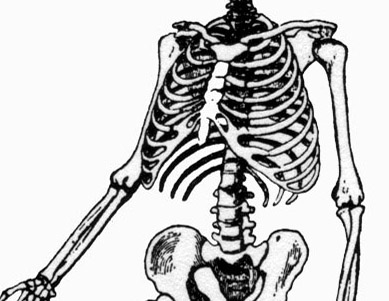 Folded arms show that there is a sort of barricade between them and other people (or their surroundings) and indicate dissatisfaction
- Resting one's arms behind their neck shows that they are open to what is being discussed and interested in listening more
- Pointing one's finger can be construed as aggression or assertiveness
- Touching the front of the neck can show that someone is interested and concerned about what another is saying
- Hand movements that are upward & outward signify positive and open messages
- Palms that are faced outwards towards another indicate one's wish to stop and not approach
- If one's fingers are interlaced or if the finger tips are pressed together, it usually shows that a person is thinking and evaluating
- If offering ideas to other people, many times the sides of one's palms are close together, with fingers extended

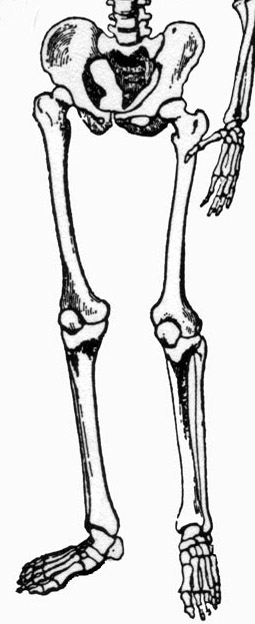 Putting your hands on your hips can show eagerness and readiness (also, at times, aggression)
- Hips pushed forward, while leaning back can show that one feels powerful (also can be a suggestive gesture)
- A wide stance - where one's feet are positioned far apart - signifies more power and dominance
- When one sits with legs open and part, they might feel secure in their surroundings
- Crossed legs can mean several things: relaxed/comfortable, or defensive - depending on how tense the leg muscles are
- When you cross your legs towards another person, you are showing more interest in them than when they are crossed away in the other direction
- A confident and powerful position is the "Figure of Four Cross" when one's ankle is atop the other leg's knee and the top leg is pointed sideways
- Bouncing your foot if your legs are crossed can show that you are bored or losing patience

- The lowering of the eyes can convey fear, guilt or submission
- Lowered eyebrows and squinted eyes illustrate an attempt at understanding what is being said or going on
- A lack of confidence or apprehensiveness can be displayed when you don't look another person in the eyes
- One tends to blink more often if nervous or trying to evaluate someone else
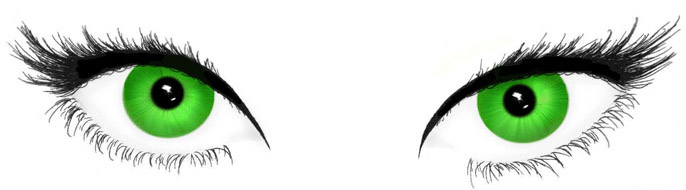 If you look directly into another person's eyes you are displaying self-assurance
- Wide eyes show more of an interest in a subject or person
- If you are irritated with a comment made by another during a conversation, a common movement is to take a quick glance sideways
- Staring at someone can be an aggressive gesture or suggest that the one staring feels dominant
- Recalling a memory is usually done by looking up and to the right
- Looking directly upwards can indicate that one is thinking
- Eye contact is normally broken if someone feels insulted by another
domingo, 4 de setembro de 2011
Político é engolido por cobra Sucuri no Amazonas

Um deputado de Santa Catarina foi engolido por uma cobra Sucuri, na manhã desta quarta-feira (8), durante um passeio pelo Amazonas. De acordo com testemunhas, o deputado fazia um passeio de barco, bebia uísque e contava dinheiro de uma maleta, bastante feliz, quando foi surpreendido pela cobra. “Eu vi quando a cobra pegou, enrolou, e engoliu”, contou um pescador que estava próximo do local.
Após presenciar o ataque da sucuri contra o deputado, o pescador foi até uma comunidade buscar ajuda. Entretanto, ao invés de conseguir ajuda, conseguiu na verdade foi alavancar gargalhada do povo. “O povo começou a rir, e até bolaram no chão gargalhando, quando eu contei que o engolido foi um político”, disse o pescador ao repórter de G17.
A esposa do deputado foi informada do ocorrido na tarde de hoje. “Eu acho é pouco. Quem mandou ir esconder dinheiro no Amazonas”, disse a viúva.